What is a SaaS experimentation framework?
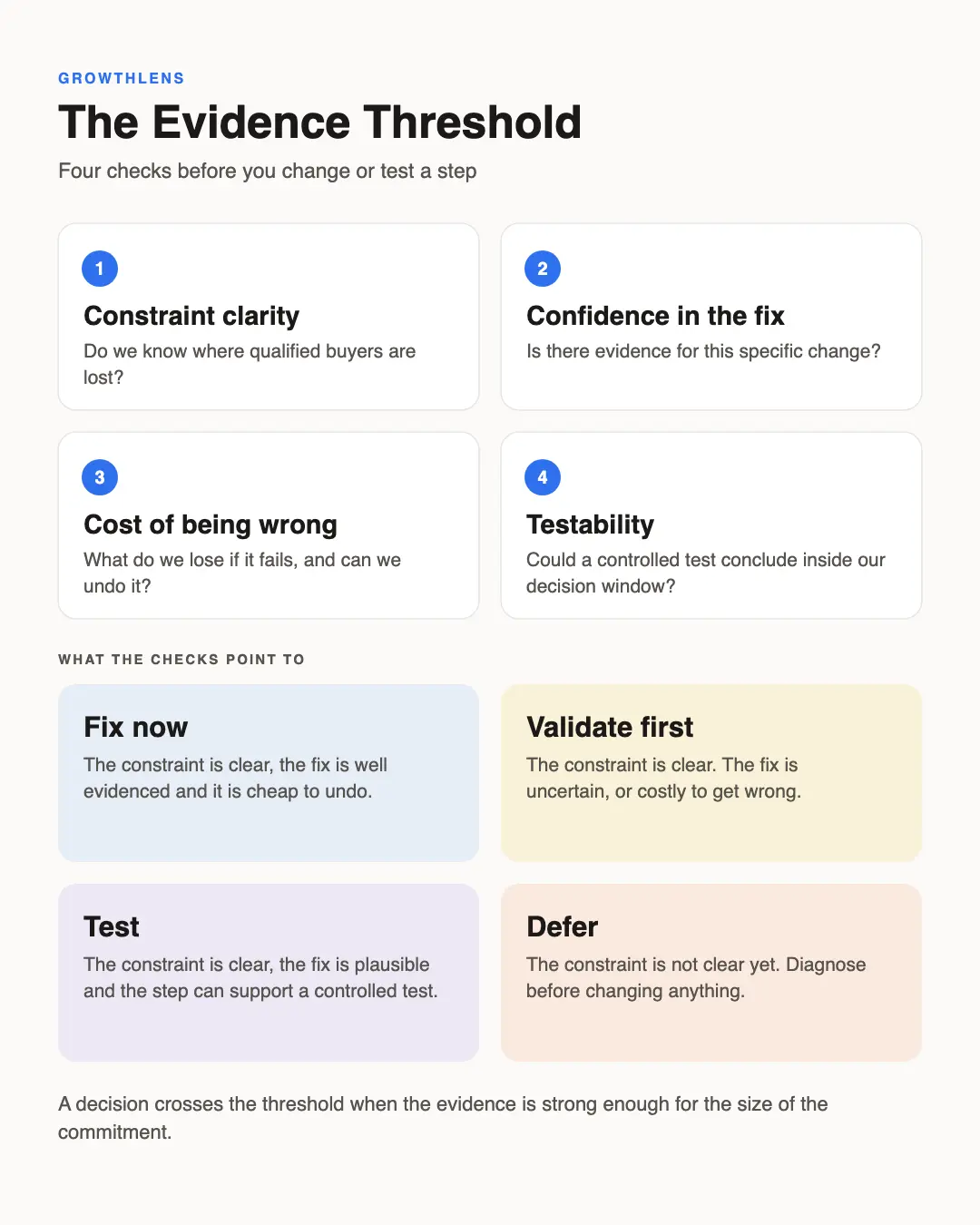
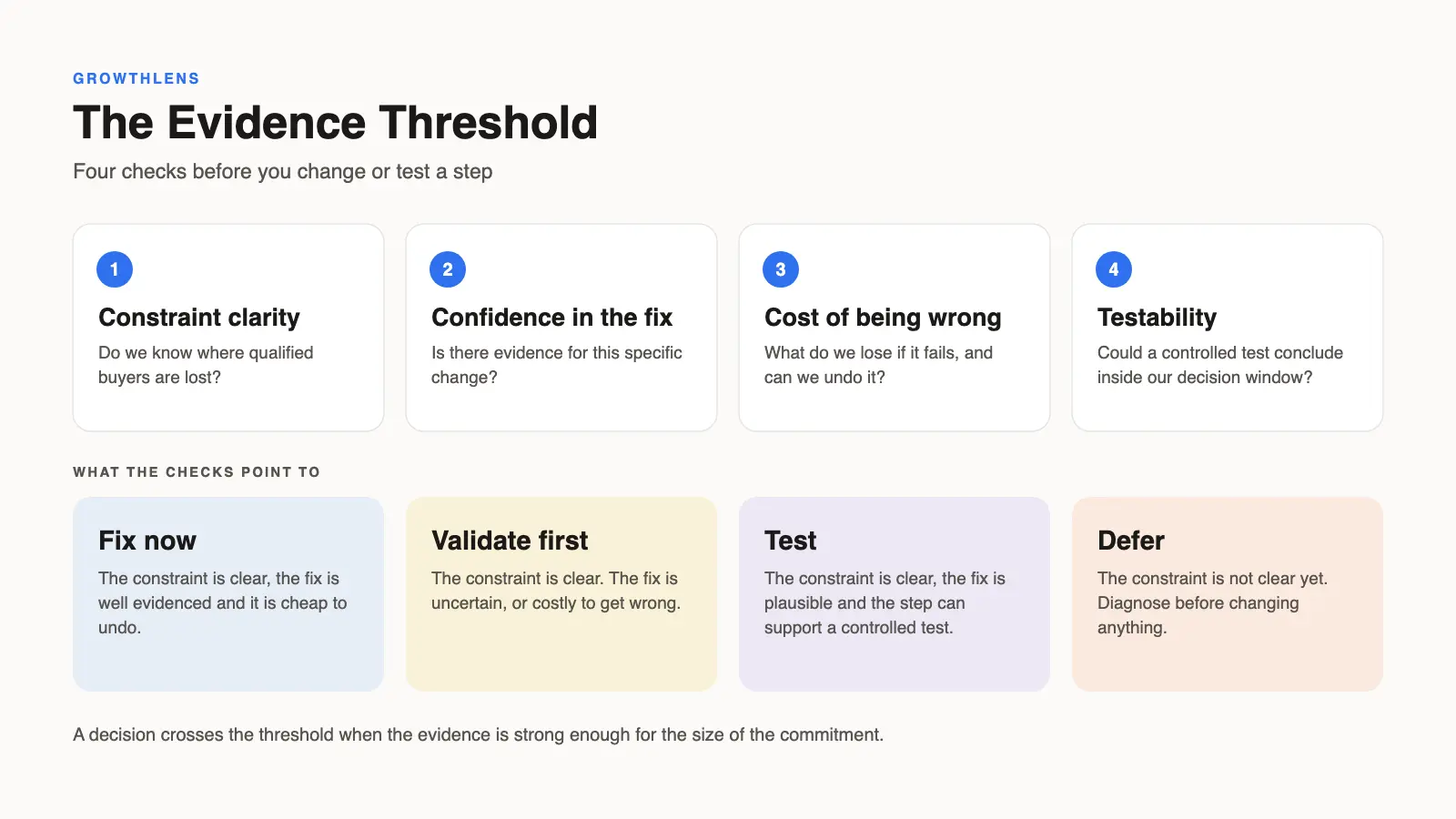
It is an agreed way of deciding what kind of evidence a change needs before it is built or tested. The one I use is the Evidence Threshold. It scores four checks for a single step: constraint clarity, confidence in the fix, cost of being wrong and testability. The scores point to one of three moves: diagnose, validate or run a controlled experiment.
How do we experiment with limited traffic?
Use evidence that does not depend on volume. Customer interviews, sales-call evidence, message tests with people who fit the ICP, prototype walkthroughs and segment rollouts all reduce uncertainty. Reserve controlled tests for the few steps that have steady traffic and a clear conversion event, which in self-serve products is often signup or early onboarding.
When is an A/B test credible in B2B SaaS?
When the step receives stable traffic from a consistent mix of sources, the conversion event is one the business trusts, and the volume can detect the change you care about within the time you can wait. Decide sample size and duration before starting, and check a downstream quality metric before calling a winner.
Who should own experimentation in a small SaaS company?
One person should own the decision log. In a small company that is likely to be the growth lead, a product leader or the founder. The evidence comes from several teams. Sales and support supply the reasons, marketing supplies acquisition data and product supplies activation data. Ownership means keeping the record and making the call.
How is this different from ICE or RICE scoring?
ICE and RICE rank ideas by expected impact, confidence and effort. They help you order a backlog. The Evidence Threshold answers a different question: what kind of evidence this decision needs next. You can use both, scoring ideas for priority and then checking each chosen idea against the threshold.
What do we do with an inconclusive test?
Treat it as information. It usually means the true difference was smaller than the test could detect. Check whether the change addressed a confirmed constraint. If it did not, go back to diagnosis. If it did, the fix may need to be bolder, or validated in another way.
 GrowthLens