Your Website Experience Is the Front Door to Your Product Experience
Before anyone touches your SaaS product, they experience your website — the first environment where your value is tested.
Before anyone touches your SaaS product, they experience your website, the first environment where your value is tested. It’s not just pixels, messaging, or SEO. It’s a blend of product expertise, product marketing, and conversion strategy working together to communicate clarity, credibility, and trust in seconds.
Your website experience translates complex functionality into human understanding. Do users instantly see what problem you solve? Do they believe your solution fits their world? Is the path to “try” / sign up for a trial or “buy” / book a demo call effortless?
When treated strategically, your website experience becomes the front door to your business and the first version of your product’s growth system.
It’s where positioning meets user behavior, and every click reveals how well your story resonates with real people. Your website experience is your growth lab — where you validate your message, test demand, and learn what drives curiosity and intent before scaling your product.
Website Experience vs Product Experience
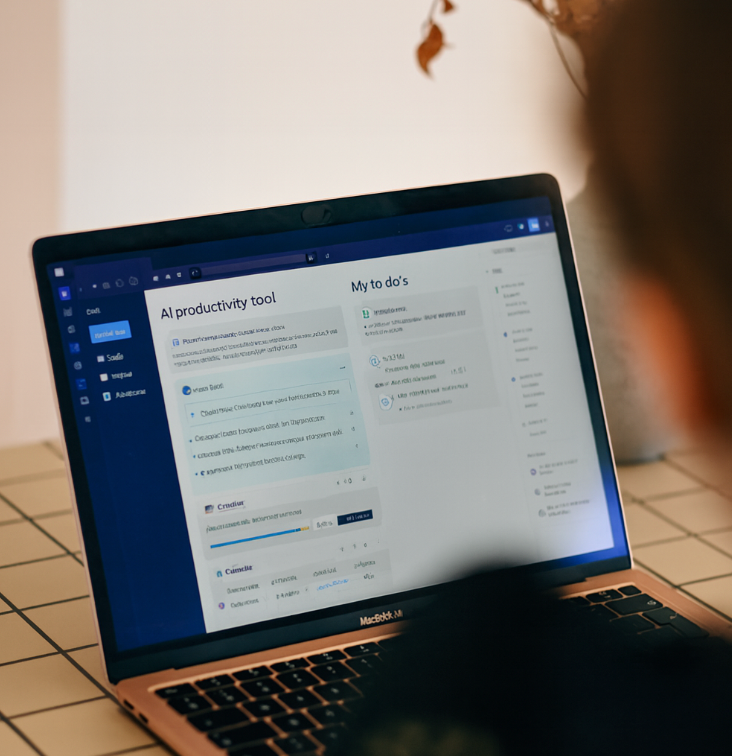
Why Marketing, Product Growth, and CRO Must Collaborate Before Launch
In most early SaaS teams, these functions sit in silos: marketing builds pages, product builds features, and CRO is called when conversion rates drop. That approach leaves growth potential on the table. A strong website experience emerges when these disciplines work together.
Product expertise ensures the story is accurate and value-driven. The product marketer defines who it’s for and how to position it, turning capability into benefit. CRO brings behavioral science and structure, ensuring users don’t just understand the offer, but they act on it. When these layers align, your website stops being a brochure and becomes a learning system capable of testing, iterating, and informing product direction before you even write code.
What’s Changing with AI SaaS in 2025
The rise of AI products has made this convergence more urgent and more competitive. Every day, new AI tools launch with similar promises, landing pages, and pricing models. But users have changed. They don’t just want to know what your AI does, but they want to understand how it fits into their workflow and why it’s better than the rest.
AI has transformed 3 key realities.
- Speed: you can launch a product in days, but clarity still takes work.
- Volume: dozens of “AI copilots” fight for the same audience.
- Expectations: buyers benchmark your clarity against the best in the category. To stand out, your website experience must evolve from information to demonstration.
Communicate clarity in five seconds. Use your above-the-fold real estate to show the exact problem and payoff. Show, don’t tell, use micro demos or real examples to visualize outcomes. Turn curiosity into action and ensure every CTA should lead to an experience, not just a form. AI made it easier to build products fast, but harder to stand out. Your website experience is now your primary differentiator.
The Future: Website as a Living Growth Layer
Modern SaaS and AI startups are breaking the old divide between website and product. Your website is no longer static; it’s the first layer of your user journey. Interactive demos, embedded onboarding, and AI-powered personalization turn websites into living experiences that teach, guide, and convert users before they ever sign in.
This shift means analytics and CRO start earlier. You’re not just tracking clicks — you’re learning how users interpret your value. Product and marketing blend, with the marketing site becoming a lightweight version of your product. Iteration never stops; as your product evolves, so does your website’s message, flow, and UX. Your website experience is no longer separate from your product. It is part of it, the part that makes everything else possible.
The Importance of Website and Product Experience Growth Teams
As SaaS and AI companies mature, two growth layers emerge and both require dedicated focus.
The **Website Experience Growth Team **focuses on the first stage of user intent. It experiments with messaging, landing page structure, conversion flows, and demand validation. This team blends product marketing, design, and CRO to turn visitors into signups, increase qualified sign-ups and reduce acquisition costs.
The **Product Experience Growth Team **takes over once the user signs up. It optimizes activation, onboarding, and feature adoption. This team blends product management, UX research, and behavioral analytics to ensure that users reach value fast and return consistently.
Too many startups invest heavily in acquisition but leave product experience optimization until retention declines. Continuous collaboration between both teams creates a full-funnel growth loop: website experiments inform onboarding priorities, and product insights feed back into messaging and positioning. Ultimately, though, product experience becomes more complex and you
Use Cases
An early-stage AI productivity tool used its landing page to test which use cases resonated most — marketing agencies vs individual freelancers. The website team ran quick copy and visual experiments; analytics showed agency visitors converted 3x higher. That insight directly influenced product onboarding, which was later tailored to agency workflows.
A project management SaaS saw users drop off after the first login. The product experience team identified friction in the setup flow. Working with the website growth team, they added an interactive onboarding demo directly to the home page. The result: trial-to-paid conversion improved by 28%.
An AI writing tool found that most users didn’t reach the “aha” moment during trials. The website growth team simplified the homepage to show one key outcome — “Generate a polished email in 10 seconds.” The product team mirrored that promise inside the app by adding a guided first-use template. Activation doubled, and refund requests fell sharply.
These examples show how treating website and product experience growth as a single, connected ecosystem creates measurable impact. Growth is no longer a marketing activity — it’s an operational discipline embedded in both touch points.
Website Experience vs Product Experience KPIs
The Website Experience is your attention-to-intent system — its goal is to attract the right traffic, communicate value instantly, and convert curiosity into qualified actions. The Product Experience is your intent-to-value system — its goal is to help new users achieve the promised outcome quickly and build ongoing engagement. Together, they form a continuous loop: your website drives qualified users into the product, and product insights refine what the website promises.
Website Experience KPIs
- Focus: clarity, credibility, and conversion.
- Acquisition & Engagement: unique visitors and sessions, traffic source mix, scroll depth, average time on page.
- Conversion & Intent: sign-up or demo conversion rate, CTA click-through rate, landing page conversion by segment, bounce rate by traffic source.
- Trust & Experience: clicks on trust elements, clarity feedback loops from session recordings or surveys.
Example goal framework:
- Convert at least 20–25% of traffic from paid campaigns to free trials or waitlists
- Maintain bounce rate below 50% on key pages
- Improve CTA click-through rate by 15% quarter-over-quarter
Product Experience KPIs
- Focus: activation, adoption, and retention.
- Activation: activation rate, time-to-value, onboarding completion rate, feature discovery rate.
- Adoption & Engagement: weekly or monthly active users, feature usage depth, session frequency and duration, trial-to-paid conversion.
- Retention & Monetization: day 7 and day 30 retention, churn rate, expansion MRR, customer lifetime value.
Example goal framework:
- Achieve 60–70% activation rate within 3 days of signup
- Reach day 30 retention above 40%
- Increase trial-to-paid conversion by 20% within a growth cycle
Your Website Experience KPIs validate message–market fit.
Your Product Experience KPIs validate value–market fit.
When trial activation data drops, revisit website messaging. When users churn post-onboarding, check if your site overpromised or misaligned expectations.
Who You Need to Build and Optimize Your Website Experience

Product Strategist or Growth PM — Owns the narrative and flow from awareness to activation. Defines the “aha” moment and ensures the site reflects that journey. - OWNS PRODUCT EXPERIENCE
Product Marketer — Shapes positioning, audience segments, and messaging hierarchy. Turns technical capability into human benefit and ensures every section communicates value and differentiation. - OWNS WEBSITE EXPERIENCE AND PART OF PRODUCT EXPERIENCE
CRO or UX Specialist — Bridges behavior and conversion psychology. Analyzes user paths, heatmaps, and scroll behavior to pinpoint friction points and craft data-backed improvements. - OWN both
UX Designer or Creative Technologist — Translates insights into interactive clarity. Designs experiences that feel intuitive, trustworthy, and visually aligned with the product’s promise. - OWNS cohesive design consistency on website and product
Developer or No-Code Builder — Implements and iterates quickly, supporting experiments with tools like Webflow, Framer, or custom components. - OWN both
Together, these roles form the Website Experience Team — a hybrid squad that combines storytelling, usability, and experimentation to create measurable growth before your product even scales.
Key Takeaways for SaaS and AI Founders
In Summary
The best SaaS and AI startups don’t wait for traction to optimize. They design their website and product experiences as interconnected growth engines — where clarity, usability, and behavior data drive consistent learning and conversion. AI has made it easier than ever to launch a product, but building experiences that earn belief, engagement, and long-term retention remains the strongest competitive advantage a founder can build.
Related posts:
How to Audit a Broker Conversion Page That Isn't Converting
You've confirmed the traffic is right and the journey works. This is how you find out what the page is actually missing.
How to Check Whether Your Traffic Is Actually Worth Converting
The session count is the least useful number in your report. Here's what to look at instead.
Your Traffic Looks Fine. So Why Aren't People Enquiring?
When the acquisition is right but the page doesn't match what the visitor came for, you have an intent problem. Here's how to diagnose it.